

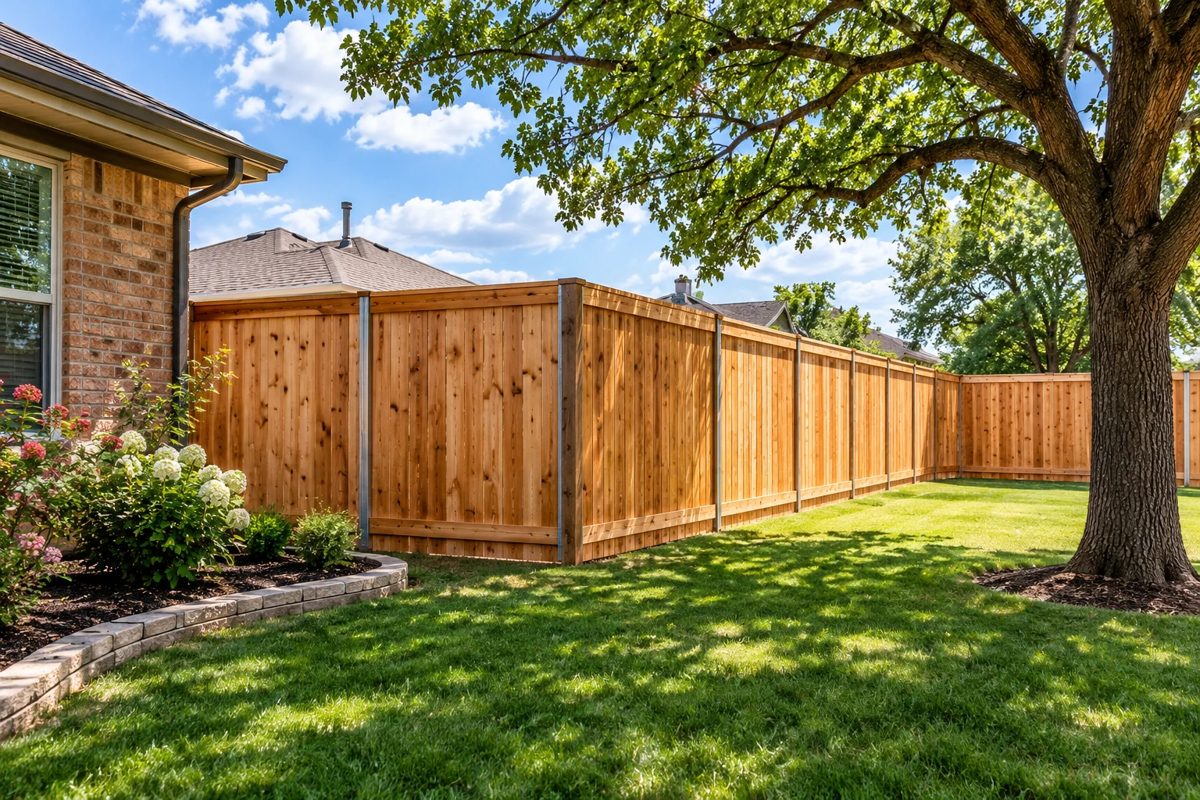
A leaning fence almost always comes down to the posts. Either the post itself has rotted at the ground, or the soil and footing around it have let go. Around Oklahoma City, the usual suspects are our red clay, the wind and wood posts that have quietly rotted below the dirt line. A lean caught early is often a small fix. Here's how we check a leaning fence, and how you can check yours before you call anyone.
Why fences lean in central Oklahoma
Most fences that lean here are pushed over by a mix of three things working on the posts year after year.
- Red clay that won't sit still. A lot of the metro sits on clay that swells when it's wet and shrinks and cracks when it dries out. After a wet spring and a dry August, the soil around a post has opened and closed many times. Each cycle loosens the grip on the footing a little, and the post starts to tip toward whichever side gives first.
- Wind on a solid fence. A six-foot privacy fence acts like a sail. Oklahoma wind most days of the year, plus the hard gusts that come with spring storms, pushes on every post along the run. Shallow or narrow footings can't hold against that forever.
- Rot at the ground line. Wood posts stay wettest right at soil level, where clay holds water against them. That's where they soften first, and it's often hidden until the fence starts to move.
Sprinklers that soak the same posts every morning and heavy gates on undersized posts make all of this worse.
Rocking post or rotted post? How to tell
This is the most useful check you can do yourself, because it decides whether the post can be saved. Pick the post where the lean is worst and try these:
- Push the fence near the post. If the whole post moves together with its concrete, and you see a gap open in the dirt around the footing, the post is solid but the footing has loosened. That's a rocking post.
- Look at the base. Pull the grass back at the ground line. Dark, crumbly or stringy wood, or a post that looks pinched or thinner at the soil, is rot.
- Try a screwdriver. Press it into the post right at ground level. Sound wood resists. If the tip sinks in easily, the post is rotted, no matter how good it looks higher up.
- Check whether it bends or tips. A post that bends in the middle or snaps back when you let go is usually broken or rotted near the ground. A post that tips from the bottom as one straight piece usually has a footing problem.
Check the posts on either side too. One bad post is a very different job from a fence where most posts are soft.
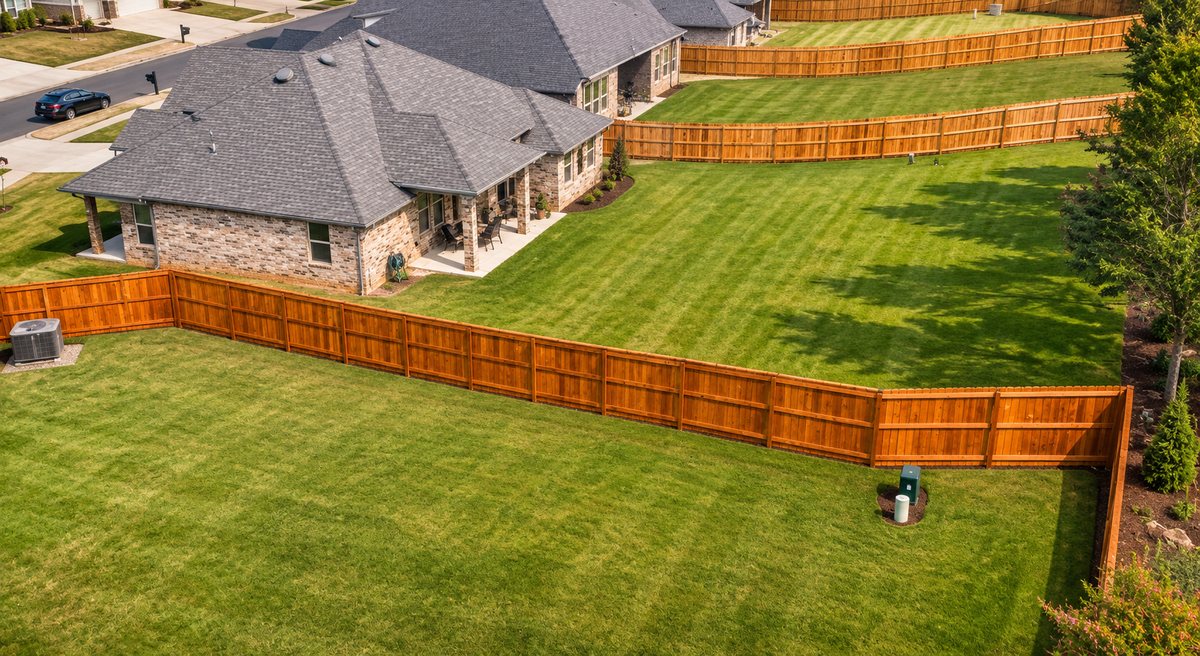
When a leaning fence can be fixed
A lot of leaning fences are a fence repair, not a new fence. These are the cases where fixing it usually makes sense:
- One to a few posts are leaning and the wood is sound. We dig out the old footing, plumb the post and reset it in concrete.
- A post is rotted but the rest of the fence is in good shape. We replace that post. In many cases we swap a rotted wood post for a steel one so the same spot doesn't fail again.
- A gate post is pulling the fence over. Resetting or replacing that post, and squaring the gate, often straightens the section next to it.
We set posts dry with concrete on most jobs. Our post on wet vs. dry concrete for fence posts explains why, and why the shape of the footing matters so much in clay.
When it's time to replace the fence
Sometimes straightening a few posts just puts off the inevitable. These signs usually point to a new fence:
- Most of the posts are soft at the base. If the screwdriver sinks into post after post, resetting a few won't stop the rest from going.
- The whole run is leaning the same way. That usually means the posts were set too shallow from the start, and every footing has the same problem.
- The boards are gray, brittle and pulling off the rails. New posts under old, worn-out boards rarely make sense for long.
- A storm has already knocked part of it down. If you're dealing with wind damage on top of a lean, our guide to repairing or replacing a fence after a storm walks through what to look at first.
Building a fence that stays straight
If you do replace it, the posts are where the money matters most, because they're the part you can't see once the fence is up. We set every post in concrete and size the footings for the fence, with deeper, heavier setups for gate posts.
The post material is the other big decision. Wood posts can rot at the ground line, while steel posts don't rot and hold up well to Oklahoma wind. That's why a lot of the cedar privacy fences we build go on steel posts. We compare the two in detail in wood vs. metal fence posts.
To help any fence stay straight, aim sprinklers away from the fence line and keep soil and mulch from piling up against the posts.
What a fix costs
Straightening a fence is priced on how many posts need work, whether they're being reset or replaced, and the type of fence. A couple of posts is a small job. If you end up replacing the fence, most home fences in the metro run about $20 to $60 per foot installed, and our fence cost guide breaks that down by material. Wyatt meets every estimate himself and gives you a free written quote. We're based in Moore, so if you're nearby, our Moore fence company page covers how we work in town.
Frequently asked questions
A brace can hold it for a while, but it doesn't fix the cause. If the footing has loosened or the post has rotted, the fence will lean again once the brace comes off or the next wet season hits.
Wet clay gets soft and heavy, and footings that were already loose have less to grip. Wind on a soaked fence line is often what finally tips posts that were close to going.
Steel posts don't rot, which removes one of the main causes. They still need to be set at the right depth in concrete, because a shallow footing can tip in clay no matter what the post is made of.