

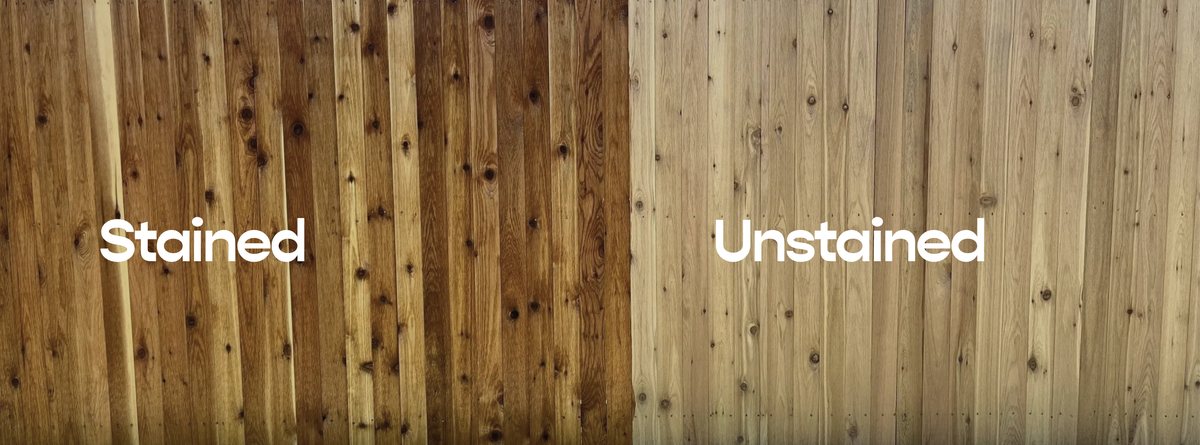
If you want your cedar fence to keep its color and hold up better to the Oklahoma sun, stain it; if you like a silver-gray look and don't mind a little more cracking and checking over time, you can let it go gray. Graying doesn't mean the fence is failing, but bare cedar in our heat and wind dries out and weathers a lot faster than it would in a mild climate. Here's how we think about it.
What the Oklahoma sun does to bare cedar
New cedar comes off the truck a warm orange-tan. Left bare, it starts to change within one summer here. A few things are working on it at once:
- UV light. Strong sun breaks down the surface fibers of the wood, which is what turns cedar silver-gray. South- and west-facing sides of a fence usually gray first, because they take the full afternoon sun.
- Heat and dry wind. Long stretches of summer heat and steady wind pull moisture out of the boards. As the wood dries and shrinks, small cracks (called checks) open along the grain, and thinner pickets can cup or twist.
- Wet-dry swings. A spring storm soaks the boards, then a hot, windy week bakes them dry again. Bare wood soaks up water fast and loses it fast, and that back-and-forth is hard on it. Sprinklers and red clay splash along the bottom make it worse.
Cedar has natural oils that help it resist rot and insects, which is why it is such a popular choice for privacy fences. But those oils don't stop the sun, and they don't stop the boards from drying out.
Why stain a cedar fence?
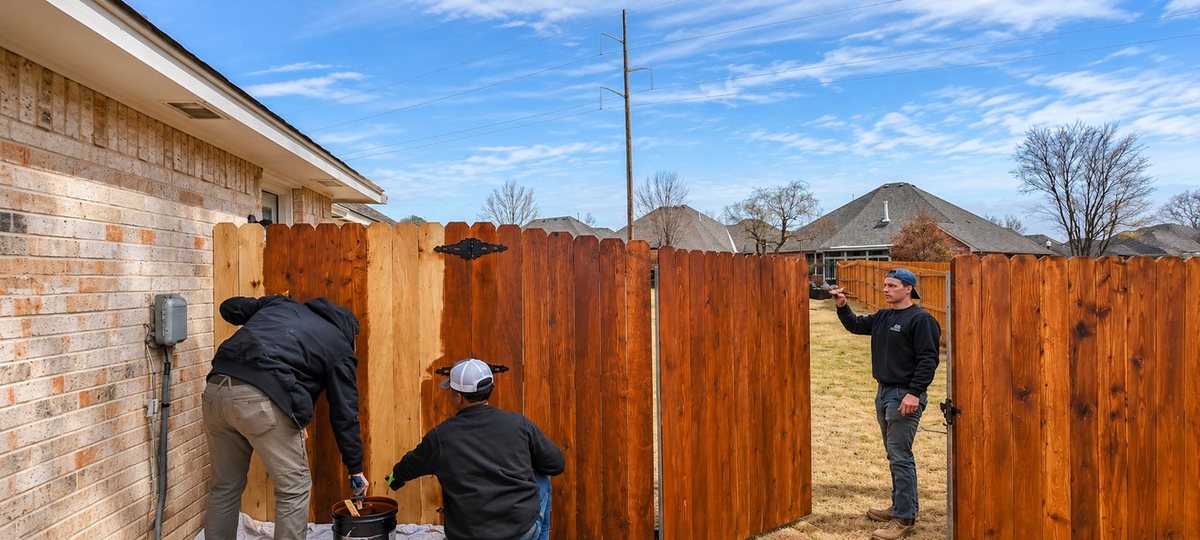
Staining is a big part of the work we do on new fences, because most of our customers want the fence protected from day one. A good stain or sealer does a few things for cedar:
- Slows the graying. Pigment in the stain blocks some of the UV that turns bare wood gray, so the fence keeps its color longer.
- Sheds water. A sealed board takes in less water when it rains, so it swells and shrinks less. That means fewer cracks, less cupping and fewer pickets pulling loose.
- Evens out the look. Stain blends cedar's board-to-board color differences into one even tone.
- Fits HOA rules. Some neighborhoods set a stain color for fences. In Edmond, for example, plenty of newer subdivisions do, and our Edmond fence company page covers how we build to HOA guidelines.
Stained vs. left natural: the trade-offs
Neither choice is wrong. It comes down to the look you want and how much upkeep you'll do.
| Stained cedar | Left to gray | |
|---|---|---|
| Look | Rich, even color you choose | Weathered silver-gray, varies board to board |
| Sun and heat | Grays and dries out more slowly | Grays within a season or two |
| Water | Sheds rain better, less swelling | Soaks up water, more cracking and cupping |
| Upkeep | Re-coat every few years | Very little, other than repairs |
| HOA | Can match a required color | May not meet a stain-color rule |
If you're still choosing the wood itself, our post on cedar or pine for an OKC fence compares the two, and whether pressure-treated pine is good for a fence explains why pine almost always needs a finish.
When to stain a new cedar fence
A common mistake is staining too early. Fresh cedar still holds moisture, and stain can't soak into wet wood. It sits on top, dries blotchy and wears off sooner. The wood needs time to dry first.
How long depends on the boards and the weather. On our cedar privacy fence page we note that thinner 5/8″ pickets do best sealed soon after the fence goes in, since they're more likely to split and warp in the sun, while thicker 7/8″ pickets can wait about four weeks.
A simple check: sprinkle some water on a board. If it beads up and sits there, the wood isn't ready. If it soaks in within a few minutes, it's dry enough to take stain. Skip days with rain in the forecast and the hottest summer afternoons, when stain can dry too fast to soak in evenly.
When we build a new cedar fence, we can stain it for you as part of the job. Ask about it when Wyatt comes out for your estimate.
Keeping it up: re-staining in Oklahoma
Stain doesn't last forever, especially here. Plan on re-coating every few years. Sides that face south and west, and sections that get hit by sprinklers, usually need it first. Your stain's label will say more.
Signs your fence is ready for another coat:
- Water soaks in instead of beading up.
- The color has faded, or the boards are going gray in patches.
For homeowners doing this themselves, the basics are the same each time: clean off dirt, red clay splash and any mildew, let the fence dry fully, then apply the stain the way the manufacturer says. Fix any loose pickets or a fence repair problem before you stain, so you're not coating over a board that needs replacing.
What graying does and doesn't mean
A gray fence isn't a rotting fence. The gray is mostly on the surface, and the wood under it is often still sound.
What graying can hide is the real damage, which usually starts at the ground. A fence that has gone gray and also has soft posts, deep splits or boards that crumble when you press on them has bigger problems than color. Most fences fail at the posts long before the boards wear out, which is why many of the cedar fences we build go on steel posts. Our post on wood vs. metal fence posts explains the difference.
If you want the wood look with less upkeep altogether, a vinyl fence never needs staining. Most home fences in the metro run about $20 to $60 per foot installed, and our fence cost guide breaks that down by material.
Frequently asked questions
No. Cedar resists rot and insects on its own, and it will last without stain. Staining keeps the color and helps the boards shed water, so they crack and cup less in our sun and wind.
Yes. Gray wood can usually be cleaned and stained, but it soaks up more stain and won't look like new cedar.
Until the wood is dry enough to absorb it. Thin 5/8″ pickets are best sealed soon after the fence goes in, and thicker 7/8″ pickets can wait about four weeks. If water still beads up on the boards, give it more time.
Yes. We offer staining on the new cedar fences we build, so the fence is protected from the start. Just ask for it with your estimate.